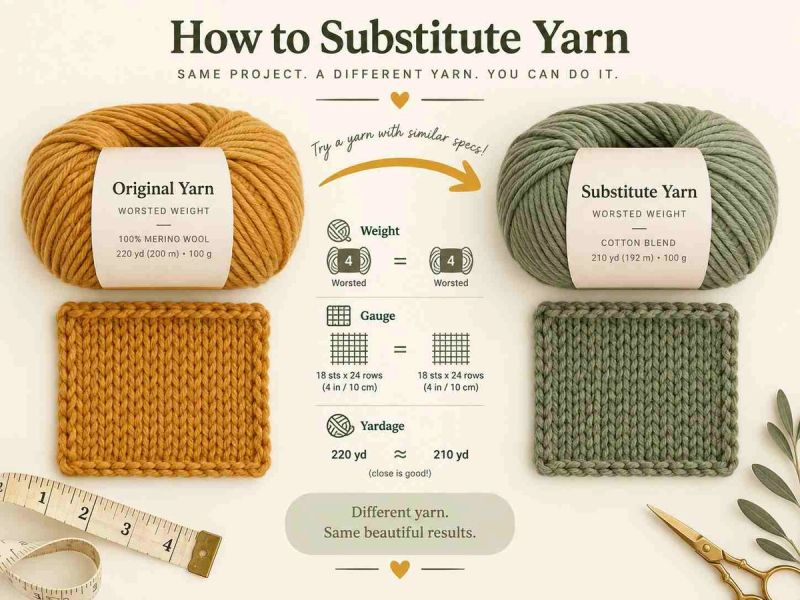
How to Substitute Yarn in a Pattern: A Practical Guide
A practical decision guide for replacing yarn in any knitting or crochet pattern. Covers gauge matching, fiber behavior, yardage math, construction, and swatching—with a worked example.
Maggie

A step-by-step guide to measuring wraps per inch consistently, with troubleshooting for common errors and honest limits of what WPI can tell you.
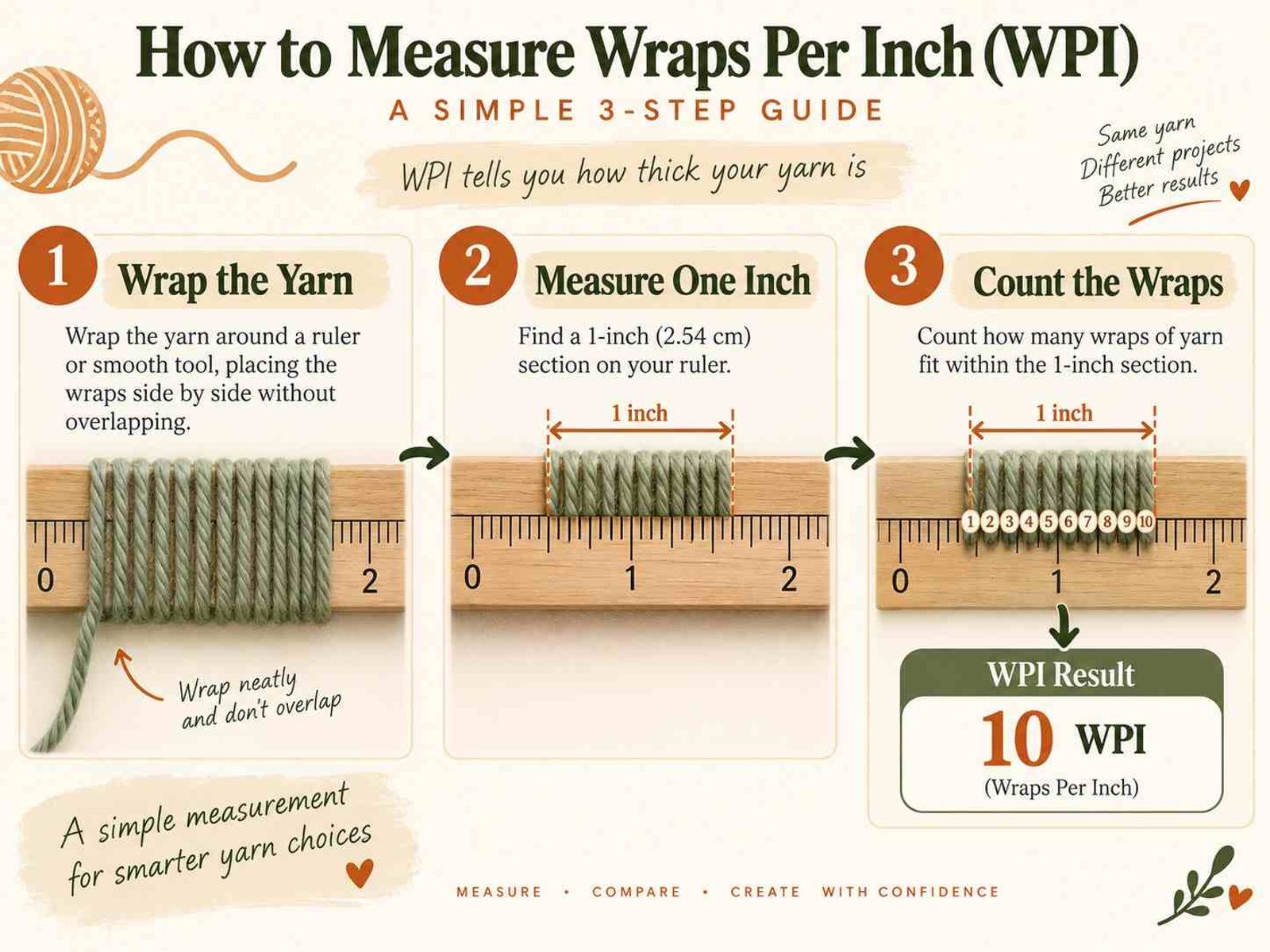
Wraps per inch (WPI) counts how many times a yarn wraps around a ruler in one inch with the wraps touching but not compressed. Measure on a smooth, flat tool, wrap gently without stretching, count across one inch, and repeat in multiple spots. Enter your result into Stittli's Yarn Weight Calculator to estimate standard yarn weight.
You found the perfect color in your stash—deep teal, soft hand, just enough yardage for a hat. No label. No memory of when you bought it. The project pattern calls for "worsted weight," and this mystery skein could be anything from sport to aran. Starting now risks a gauge disaster and hours of ripping back.
Wraps per inch (WPI) gives you a repeatable way to estimate yarn thickness before you cast on. It is not perfect, but done consistently, it narrows the uncertainty enough to make an informed choice.
WPI counts how many times a yarn wraps around a measuring tool in the space of one inch. The underlying assumption: thickness correlates with standard yarn weight categories. Thinner yarns pack more wraps into an inch; thicker yarns pack fewer.
What WPI does not measure:
WPI is one input among several. Treat it as an estimate, not a verdict.
A dedicated WPI gauge—usually a wooden or acrylic block with a 1-inch notch—can help but is not required. A standard ruler works fine if you mark your inch clearly.
Place your ruler flat on a table with the edge facing up. If using a cylindrical tool like a pencil, be aware that curvature can slightly alter how wraps sit. Flat-edge tools reduce this variable.
Hold the tail end against the ruler with gentle finger pressure. Do not pull tight.
Wrap the yarn around the tool for approximately 2 inches. Each wrap should touch the previous one without squeezing or leaving gaps. Think of books on a shelf: snug, not jammed.
Critical: Do not stretch the yarn. Stretching thins it artificially and inflates your WPI count. Let the yarn rest in its natural state.
Count the number of wraps that occupy exactly one inch. Start from a clear point—where one wrap crosses the ruler edge—and count across to the 1-inch mark.
If you wrapped 2 inches, measure the middle inch to avoid edge effects where tension often varies.
Write down your first count. Unwrap, shift to a new section of yarn, and repeat. Measure at least three separate spots along the skein.
Trial — WPI Count — Notes
1 — — — Near skein center
2 — — — Near skein outer edge
3 — — — From yarn end
Average your results. If counts vary by more than 2–3 WPI, check your technique before averaging.
Error — Effect — Fix
Stretching yarn while wrapping — Falsely high WPI (reads thinner) — Let yarn relax; hold with minimal tension
Compressing wraps together — Falsely high WPI — Touching only; no squeezing
Gaps between wraps — Falsely low WPI (reads thicker) — nudge wraps together gently
Measuring on a thick round tool — Slight distortion; wraps spread differently — Prefer flat-edge ruler or dedicated WPI gauge
Single-spot measurement — Misses thickness variation — Repeat in 3+ locations
Thick-and-thin or novelty yarns — Highly variable WPI — Measure multiple times; note range, not single number
You wrap a smooth wool-blend yarn three times:
Average: 11.3 WPI, round to 11 WPI.
You enter 11 intoStittli's Yarn Weight Calculator. The calculator suggests this likely falls in the worsted range, but notes overlap with aran. You check theyarn weights explained guideto understand that worsted and aran categories have no universal boundary, then knit a gauge swatch before committing to your hat.
Standard WPI-to-weight tables exist, but authoritative sources do not fully agree on boundaries. The Craft Yarn Council defines yarn weight categories by gauge and recommended needle size, not by WPI alone. Some spinner resources and manufacturer guides publish WPI ranges, and these ranges often overlap or shift by 1–2 WPI.
For example, "DK weight" is frequently cited near 11–15 WPI in spinner references, while "worsted" spans roughly 9–11 WPI. But another respected source may place worsted at 8–10 WPI and DK at 11–14 WPI. The categories themselves are approximate, and WPI is an approximate input into them.
Honest conclusion: Use WPI to narrow possibilities to 1–2 adjacent categories, then confirm with gauge swatching. Do not treat a single WPI number as a definitive label.
Once you have a reliable WPI average, the next job is conversion to a standard yarn weight category. That conversion depends on ranges that vary by source, which is why Stittli'sYarn Weight Calculatorhandles the mapping transparently.
Enter your WPI. The calculator shows probable weight categories and their overlap. If your project allows substitution, checkhow to substitute yarnfor the full decision framework—fiber, gauge, drape, and yardage matter alongside WPI.
Grab your mystery skein, a ruler, and five minutes. Wrap, count, repeat three times. Enter your average WPI into the calculator, note the likely category range, then knit a 4-inch gauge swatch in your pattern's recommended stitch. WPI got you to the starting line; the swatch gets you to the right fabric.
A practical decision guide for replacing yarn in any knitting or crochet pattern. Covers gauge matching, fiber behavior, yardage math, construction, and swatching—with a worked example.
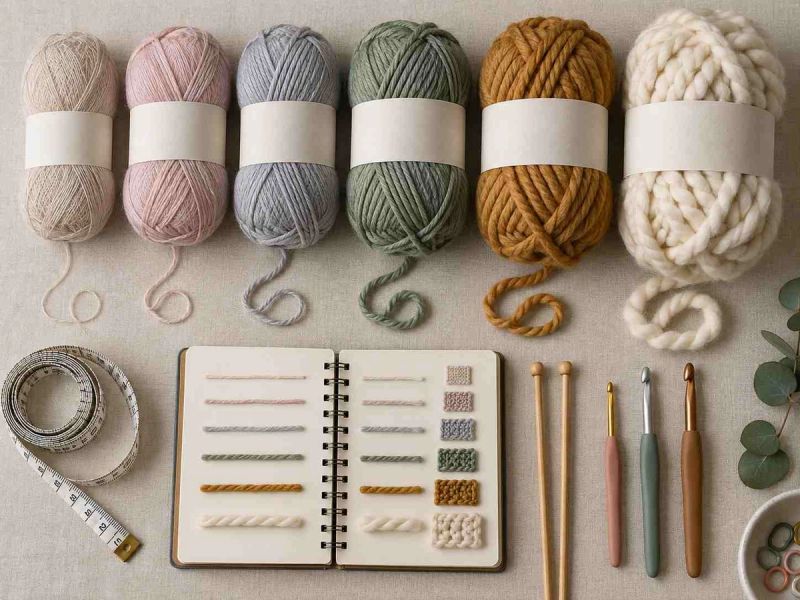
Learn how yarn weight categories work, why the same yarn can have different names, and how to read labels for confident substitution.
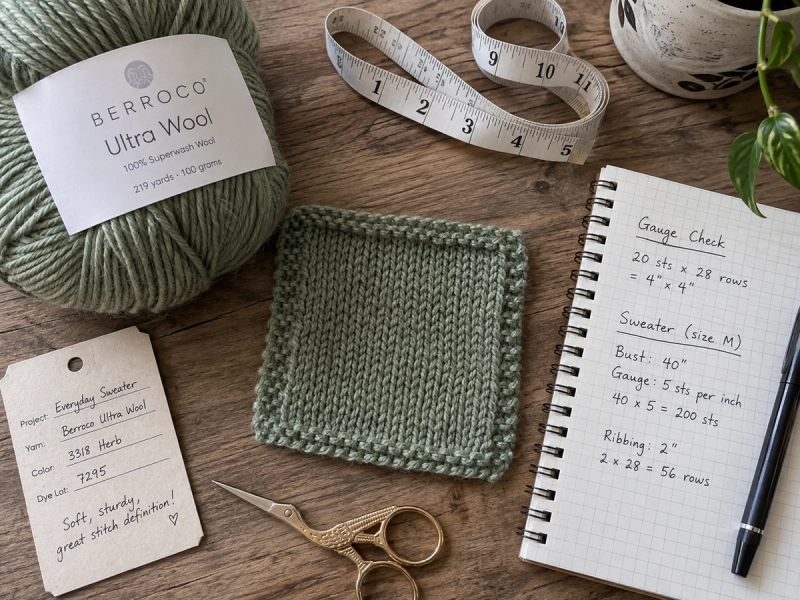
A practical guide to estimating yarn yardage: understand the variables that affect quantity, read yarn labels correctly, and know when to use a calculator for precise results.
Something look wrong? Report a calculation or content problem.