Gauge & Pattern Math
What Is Gauge in Knitting and Crochet?
Gauge is the number of stitches and rows in a measured area. Learn why a washed swatch matters and how to adjust when your gauge is different.
By Maggie · · 2 min read
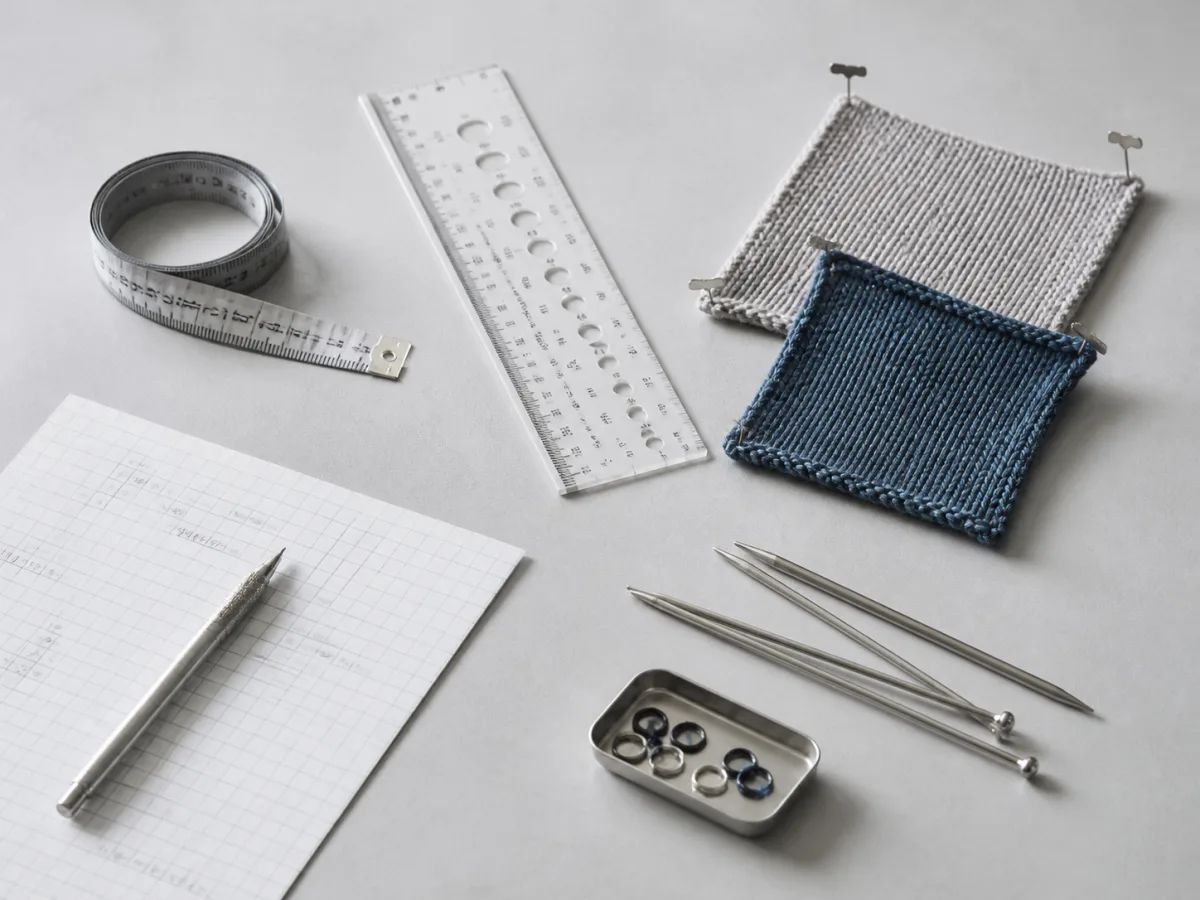
Gauge is a measurement of fabric density. It tells you how many stitches and rows fit into a set space, most often 4 inches or 10 centimetres. Two makers can use the same yarn and hook or needles yet produce different gauge, which is why a pattern’s finished size can change.
Gauge includes stitches and rows
A gauge written as 20 stitches and 28 rows over 4 inches has two parts. The stitch count controls width. The row count controls length. Both matter for garments, fitted accessories, shaped pieces, and any project with a target measurement.
- Too many stitches in the same space means your fabric is tighter and your project will tend to come out narrower.
- Too few stitches in the same space means your fabric is looser and your project will tend to come out wider.
- A row gauge difference can make a garment or blanket longer or shorter even when the width is correct.
How to measure a gauge swatch
Make a swatch that is larger than the area you will measure, using the yarn, hook or needles, and stitch pattern called for by the project. Wash or block it as you will the finished item, let it dry, then measure in the centre rather than along an edge.
Measure after washing or blocking
Many fibres relax, bloom, or grow after washing. Measuring only an unwashed swatch can give you a pleasant surprise in a scarf but a frustrating result in a fitted garment. Handle the swatch the same way you plan to handle the finished item.
What to do when your gauge is different
First decide whether the finished dimensions matter. If they do, adjust your hook or needle size and swatch again. If you love the fabric at a different gauge, use the new measurements to calculate a different stitch count instead of assuming the original pattern numbers will still fit.